Spray drones win wider approval for crop protection on row crops
Regulators have cleared heavier payloads and multi-drone swarms, opening the door to drone spraying on large corn and soybean fields.
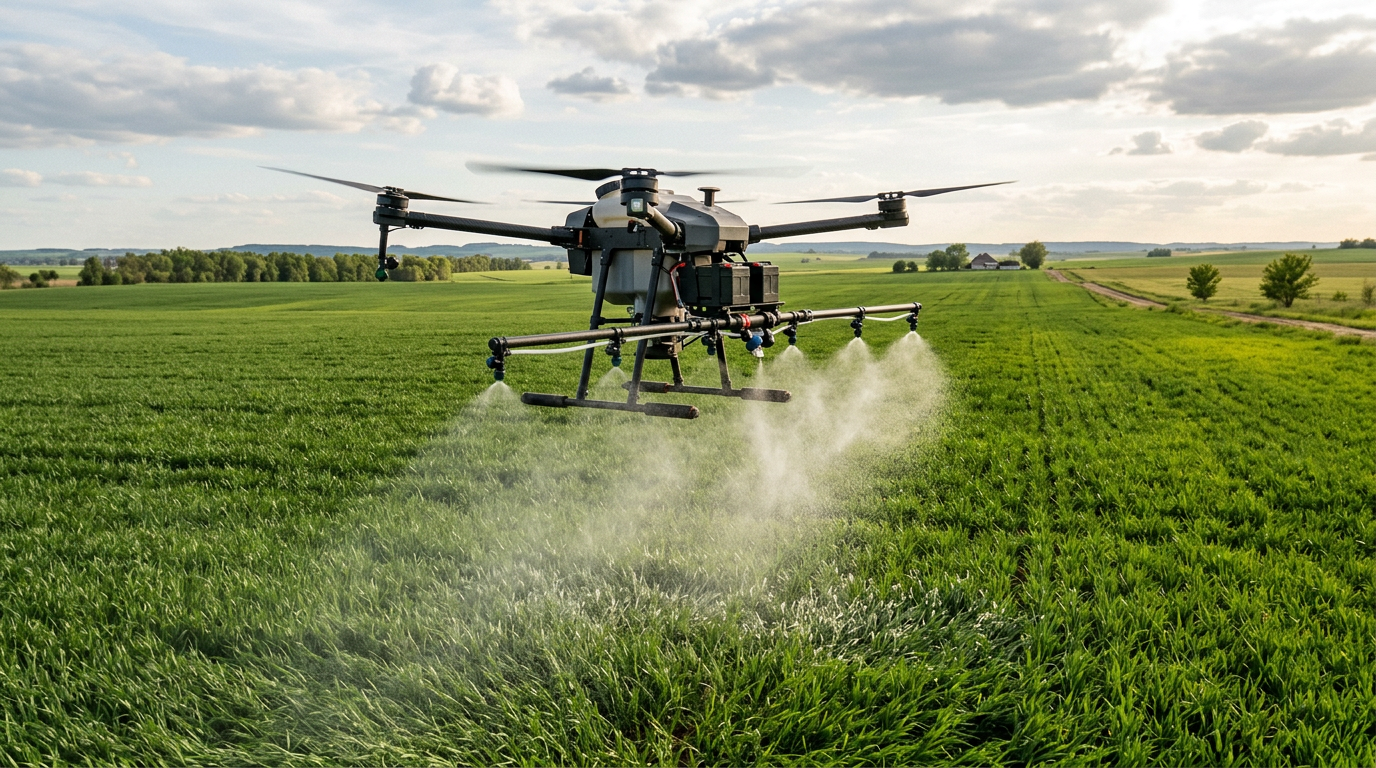
Spray drones have been common in Asian rice paddies for years, but on large Western row-crop farms they were limited by small tanks and strict rules on flying more than one aircraft per pilot. Both constraints eased this summer.
Updated rules now let a single licensed operator supervise up to three drones in a coordinated swarm, and payload limits have risen enough for the latest 70-litre machines. At that size, a three-drone team can cover roughly 40 hectares an hour.
Where drones beat the sprayer
Drones will not replace self-propelled sprayers for routine field-wide passes. Their strength is timing and access: wet fields a ground rig would rut, tall crops late in the season, and spot treatment of weed patches identified from scouting imagery.
“The fungicide window doesn't care whether the field is muddy. The drone doesn't either.”
Custom applicators are adding drone crews to their services, and several equipment dealers now sell and service spray drones alongside their tractor lines.
- Drones
- Crop protection
- Precision agriculture